What Nigeria’s New Sustainability Rules Mean for Companies
Nigeria’s Securities and Exchange Commission has asked companies to file a plan for the new sustainability reporting standards, with reporting becoming mandatory in January 2028. I explain what the rules require and why, based on my work, companies need to start preparing now.

I spend most of my working hours helping industrial companies, mostly in the UK and Europe, measure their greenhouse gas emissions. This involves gathering utility bills, fuel logs, freight records and purchase ledgers to create Scope 1, 2 and 3 inventories, which are then used for CDP submissions and science-based targets (SBTi). It is detailed work and can sometimes be tedious. For years, whenever I explained this to people back home, they often reacted by saying it sounded interesting but considered it a problem mainly for developed countries.
Nigeria is now establishing an ambitious sustainability disclosure framework, and the deadlines are approaching more quickly than most boardrooms here seem to realise. One of these deadlines has already passed, garnering far less attention than it deserved.
How we got here
The turning point came at COP27 in 2022, when Nigeria, through the Financial Reporting Council (FRC), became the first African country to commit to adopting the International Sustainability Standards Board’s first two standards (IFRS S1, which addresses sustainability-related risks and opportunities, and IFRS S2, which focuses on climate). This was a significant step forward, and since then, the focus has shifted to turning this commitment into effective institutional processes.
In 2023, the FRC convened an Adoption Readiness Working Group of around forty people from regulators, professional bodies and major accounting firms. In March 2024, this group published an adoption roadmap, which was further revised in 2026 following public consultation. This roadmap outlines a phased journey towards implementation.
There are a few things in that roadmap that I think people are skipping over, and the first is that any company adopting during the voluntary window has to pass an FRC readiness assessment before it goes ahead, which is a proper look at the company’s data and tends to turn up gaps that nobody had been looking at. The second is that limited assurance starts around a company’s third year of reporting, with reasonable assurance coming later, so at some point an auditor will be going through the numbers and anything that can’t be traced back to an invoice or a meter reading will cause trouble. The third is the timing, because mandatory reporting starts on 1 January 2028 and the first report will cover a year that hasn’t happened yet, and you can’t report credibly on a year without something from the year before to compare it against, so the real starting point is 2026 and the Securities and Exchange Commission (SEC) has now said as much itself.
What role does the SEC play?
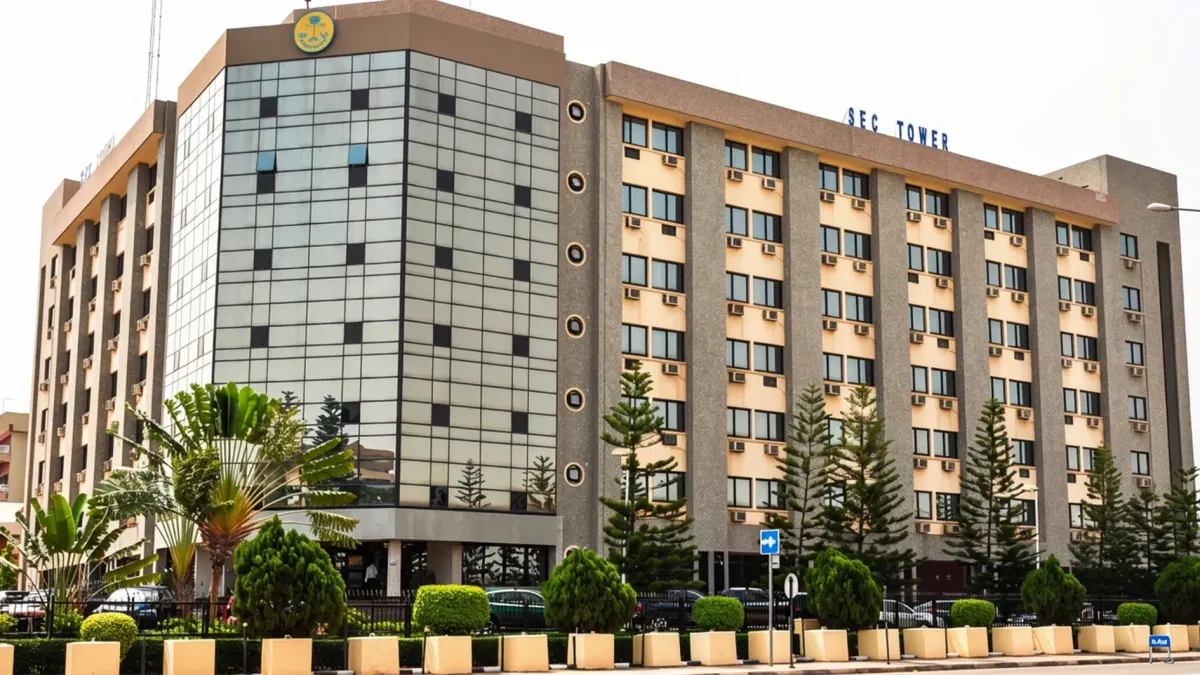
At the launch of the first Nigerian Corporate Sustainability Report in Abuja, SEC Director-General Dr Emomotimi Agama said openly that too many listed companies still publish no coherent sustainability disclosures at all or publish ones that are neither structured nor verifiable and that the Commission intends to respond, including with sanctions. He set the stakes against the size of the market, with a capitalisation approaching ₦130 trillion, assets under management past ₦8 trillion and a global investor base of sovereign wealth funds and pension funds that now treats Environmental, Social and Governance (ESG) performance as a primary input into where capital goes rather than a secondary filter, and he put it bluntly by saying that the price of entry is disclosure.
Through the middle of 2026 the Commission kept signalling that it would strengthen its guidance, engage listed companies directly on their obligations and build incentives for early adopters rather than waiting for the market to drift toward best practice on its own.
What the SEC’s circular asks companies to do
On 23 September 2026, under the Investments and Securities Act 2025, the SEC issued a circular requiring every public company and significant public interest capital market operator to submit an IFRS S1 and S2 implementation plan by 15 October 2026. Those operators include exchanges, central securities depositories, clearing houses and trade repositories. That gave companies about three weeks to file, but filing on time was always going to matter less than whether the plan was true, because the plan only takes a company as far as 1 January 2028, when disclosure itself becomes mandatory.
The circular asks each covered entity to set out how it intends to adopt the standards and what it expects to find difficult. The plan has to address eight things at a minimum, which are governance arrangements including board oversight, a gap assessment against the requirements of IFRS S1 and S2, an implementation roadmap and timelines, data collection and reporting systems, internal control and assurance arrangements, capacity building and training plans, the expected year of first reporting under the FRC roadmap and key implementation challenges.
If you read that list again, it isn’t asking to see your sustainability report at all. What the SEC wants to know is where you are, where you intend to get to and how you plan to get there, and those are harder to answer than they sound, because a presentation can make any of them look good. A company can write a confident line about board oversight or data systems when the reality is that nobody owns the data and the board has never discussed it, so each of these questions has an answer that reads well on paper and one that is actually true.
The circular has also caused some confusion, and there is no point pretending the regime is tidier than it is. Innocent Okwuosa pointed out in Premium Times that the SEC’s eight items fold together things the FRC roadmap treats as separate, phased documents, which leaves entities unsure whether everything is being demanded at once. If you are covered and unsure about the scope, that uncertainty is a good reason to engage early rather than wait.
None of this arrived from nowhere, because Nigeria has been layering sustainability obligations for well over a decade, starting with the Central Bank’s Sustainable Banking Principles in 2012, followed by the NGX Sustainability Disclosure Guidelines and the Nigerian Code of Corporate Governance in 2018, a mandate for Premium Board companies in 2019 and the SEC’s own Sustainable Finance Principles in 2021.
For most of those years, sustainability disclosure in Nigeria was fragmented, with different rules for banks, Premium Board companies and capital market operators, and none applied to everyone. In 2026, Nigeria began to consolidate those rules by adopting IFRS S1 and S2 as a single global standard, with dates attached and a regulator that has signalled sanctions for weak disclosure.
How ready are Nigerian companies?
We now have a reasonably clear picture of where the largest listed companies stand. Sustainable Stories Africa reviewed 13 NGX30 companies reporting for the year ended 31 December 2024, and the headline is encouraging, as standalone sustainability reporting is becoming standard among the largest listed firms, with eight scoring “Excellent” on the reviewers’ 25-point framework. MTN Nigeria’s report is singled out as one of the clearest examples of IFRS S1 and S2 alignment in the market, including climate scenario analysis and financial-effects disclosure. Seplat Energy, which won the ICAN/NGX award for sustainability reporting, disclosed Scope 1, Scope 2 and six Scope 3 categories against clear baselines.
That is real progress, but the same review found that external assurance remains scarce and Scope 3 disclosure is weak or missing across much of the cohort. (Their third finding, that no company reviewed has set out a just-transition plan, is the central argument of their piece and worth reading in full.)
Those first two gaps worry me most, because the roadmap is about to start asking for both. Assurance is expected from around the third reporting year. IFRS S2 asks for Scope 3 where it is material, and for most Nigerian companies in manufacturing, retail, construction and food, it typically makes up most of the footprint.
And this is only the top of the market, because the NGX30 are the largest listed companies in the country, and the picture is thinner still outside that group. The ESG State of Play report published by NECA with the ILO found that roughly 40% of Nigerian organisations are not measuring or reporting ESG at all, and only about 23% publish an annual sustainability report. The FRC’s readiness review, as reported by Sustainable Stories Africa, puts numbers on the rest, finding that fewer than 30% of listed companies publish reports aligned to global standards and fewer than 20% of sustainability reports are independently verified, while more than 60% of SMEs have no structured ESG data system at all.
Add the first two bars and you get 61%, which is the share of organisations that either don’t measure ESG at all or measure it only for internal use, so a large part of the market is starting from very little. Publishing a report is becoming normal at the top of the market, and defending that report is a much higher bar.
Why 2026 is the year that actually matters
If I were sitting across from a Nigerian CFO, the point I would press hardest is that the data you will report on is being generated right now, and in most companies, nobody is capturing it. The plan filed in October 2026 describes an intention, and whether that intention holds up by 2028 depends on whether anybody starts collecting data in the months that follow.
I say that from experience, because in my day job I have built full Scope 1, 2 and 3 inventories for manufacturers and construction firms. These are businesses in markets where sustainability reporting has been routine for years, with finance teams and systems to match, and even they struggle, because fuel records end up scattered across depots and never reconciled. In other cases, a contractor handles refrigerant top-ups and logs nothing. Reconstructing a single reporting year after the fact routinely takes months.
Nigerian companies face all of that and a harder version of it, with heavy reliance on self-generated power and fuel bought in cash across multiple sites, on top of informal suppliers who will never produce a footprint for their product and very few Nigeria-specific emission factors to calculate with. The shortage of emission factors is probably a large part of why Scope 3 disclosure in the NGX30 review looks the way it does, and the value chain is also much harder to see from Lagos than from most developed markets.
There is a precedent in Nigeria’s move to IFRS for financial reporting. The standards took effect in January 2012, and by April 2014, 22 listed companies were still applying for extensions to the deadline for filing their 2013 reports. Sustainability data is harder than financial data because it doesn’t live in the general ledger and sits in operations and procurement.
What this looks like from where I sit
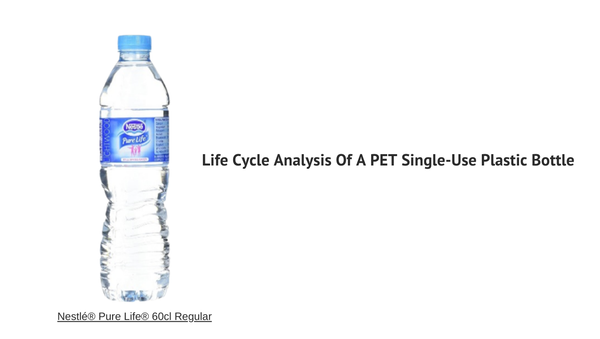
My route to this topic runs through Nigeria itself, beginning with my time as an environmental analyst at the Rivers State Ministry of Environment, where the gap between environmental policy on paper and environmental data in practice was impossible to miss. Later, I wrote up a life cycle assessment of a PET bottle produced in Nigeria. The biggest obstacle in that study was the lack of comprehensive data, particularly on the African continent, which left me leaning on estimates, industry experts and published literature more than I would have liked, and I said so in the write-up.
That gap is exactly what the Minister of State for Industry, Trade and Investment pointed at when he spoke of a persistent data gap in emerging markets, and the SEC has made a similar point about companies without structured, verifiable disclosure. Without reliable, standardised sustainability data, it is hard to price climate risk, allocate capital sensibly or make good policy, and everything downstream depends on that boring work at the bottom.
Since that study, I have worked on supply chain risk across Southeast Asia and in climate investment advisory, and I now do carbon accounting full time for industrial clients across the UK, the US, Europe and Asia, where the pattern is consistent everywhere. Companies that treat emissions data as a routine operational discipline, with metered energy, logged fuel and structured procurement records, move through reporting season without drama. In contrast, companies that treat it as an annual scramble produce numbers they cannot defend.
Nigerian companies entering the voluntary window have a real advantage here if they choose to use it, because they can watch how this played out in other markets and skip much of the painful part.
If a client came to me tomorrow with no inventory at all, this is the order I would work in.
The steps are simple, and the one I would stress most is keeping the trail, which means recording where every number came from and, for Nigeria, where the emission factor came from, because a proxy borrowed from another market with no source written down is the weak link I would expect to see most often.
The instinct I would push back on hardest is the urge to wait for the perfect methodology before collecting anything, because no inventory gets started without somebody first putting the electricity bills in one folder.
Where this leaves companies
The circular asked companies for a plan, and a plan is only as true as the data behind it, so the most important work is also the least visible.
Nigeria was the first African country to commit to these standards, and the companies that start collecting data now, rather than waiting until 2028, are the ones most likely to turn a reporting requirement into something investors can rely on. For most of them, that begins with a named owner and the electricity bills in one folder.
Sources and further reading
- Aluko & Oyebode: The ABC of ESG
- Arbiterz: SEC sets October 15 deadline for companies to submit IFRS sustainability plans
- BusinessDay: Sustainability reporting gains traction as SEC signals regulatory action
- Chris Alafaa, chrisalafaa.com: Life Cycle Assessment of a PET Single-Use Plastic Bottle, October 2024, also on ResearchGate
- FRC Nigeria: Frequently asked questions on the Nigerian Code of Corporate Governance 2018
- FRC Nigeria: IFRS Foundation recognises Nigeria’s progress in sustainability reporting
- FRC Nigeria: Roadmap Report for the Adoption of IFRS Sustainability Disclosure Standards in Nigeria (Amended 2026)
- The Guardian Nigeria: SEC to sanction companies for poor sustainability disclosures
- Innocent Okwuosa, Premium Times: Clarifying Nigeria’s SEC circular on implementation of IFRS sustainability standards
- MGI Worldwide: Challenges with IFRS in Nigeria highlight integration problems, April 2014
- Nairametrics: SEC issues deadline for public companies to submit IFRS sustainability reporting plans
- NECA and the ILO: ESG State of Play Report in Nigeria
- NGX: Sustainability Disclosure Guidelines
- The Nigerian Lawyer: Price of entry is disclosure, SEC warns weak ESG reporting may block Nigerian firms from global capital
- SEC Nigeria: Guidelines, including the Sustainable Finance Principles
- SEC Nigeria: Implementation of the IFRS Sustainability Disclosure Standards in Nigeria, circular of 23 September 2026
- Sustainable Stories Africa, via Proshare: Nigeria’s ESG Report Card: progress, assurance and the just transition gap
- Sustainable Stories Africa, via Nairametrics: Nigeria’s ESG Report Card: progress is real, but the silence on just transition is deafening
- Sustainable Stories Africa: Nigeria’s FRC readiness review sharpens IFRS sustainability adoption across key sectors
The graphics in this post were designed by me and built with Claude, from the sources above